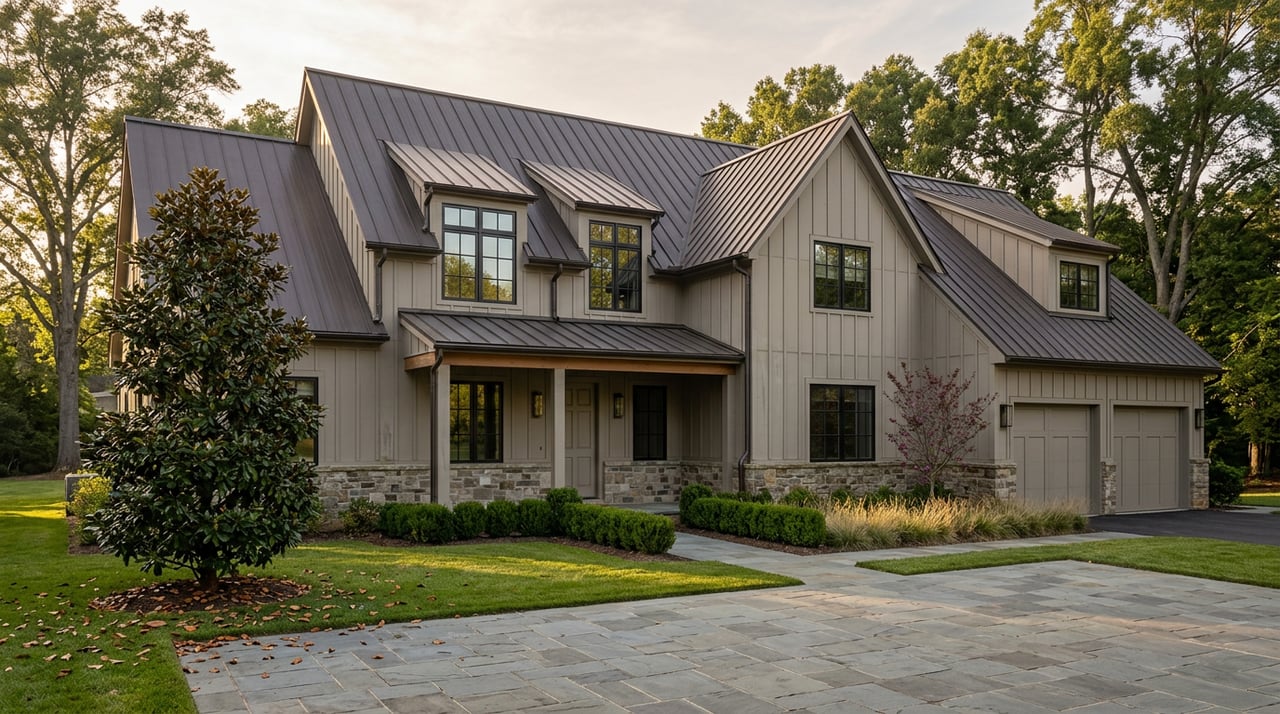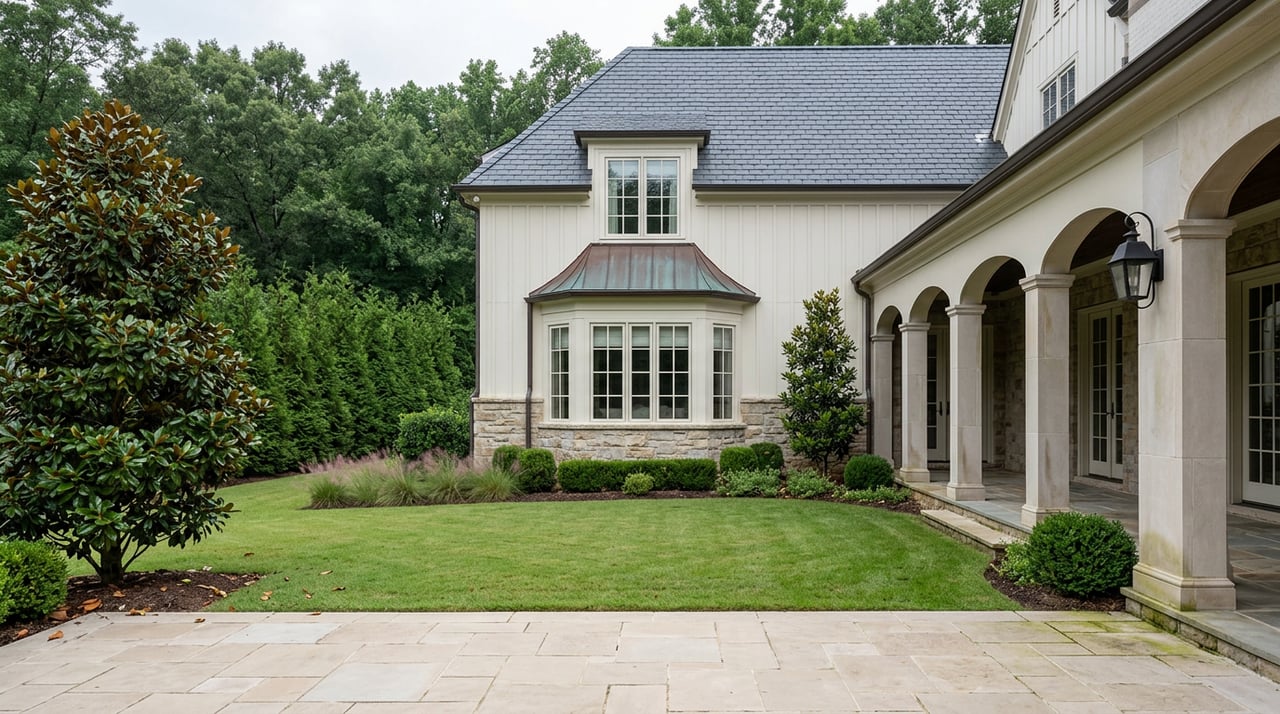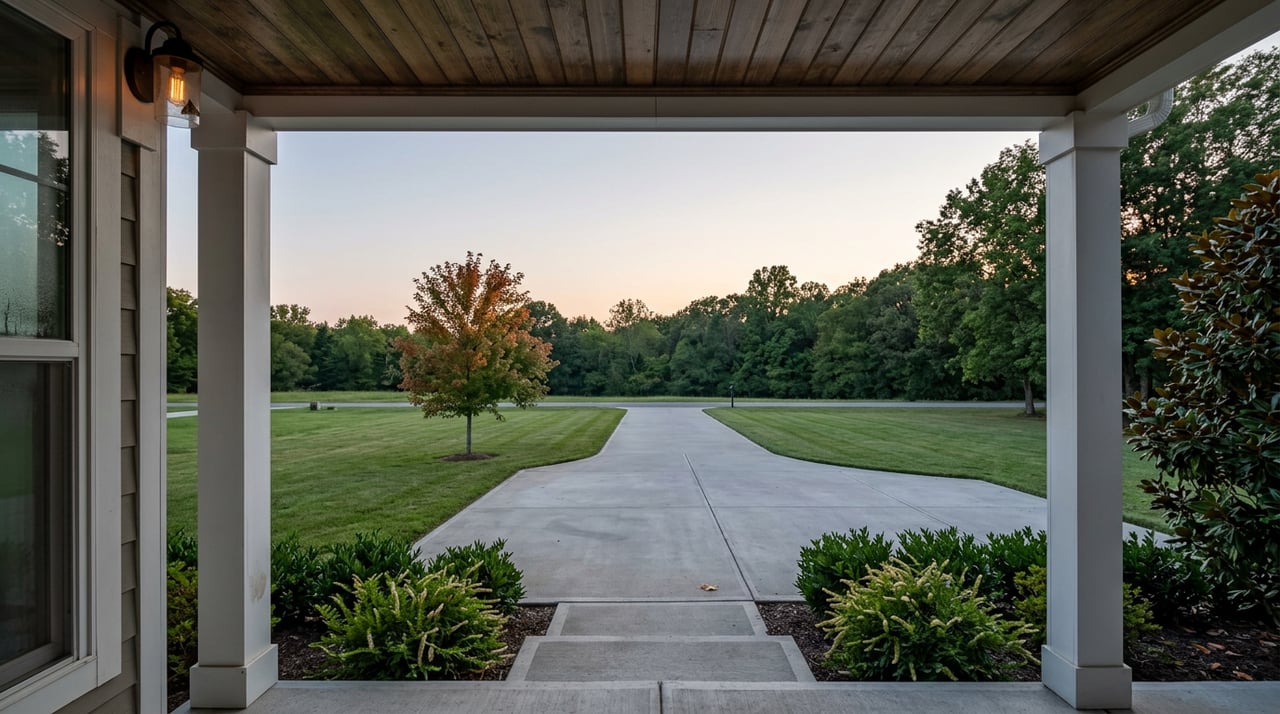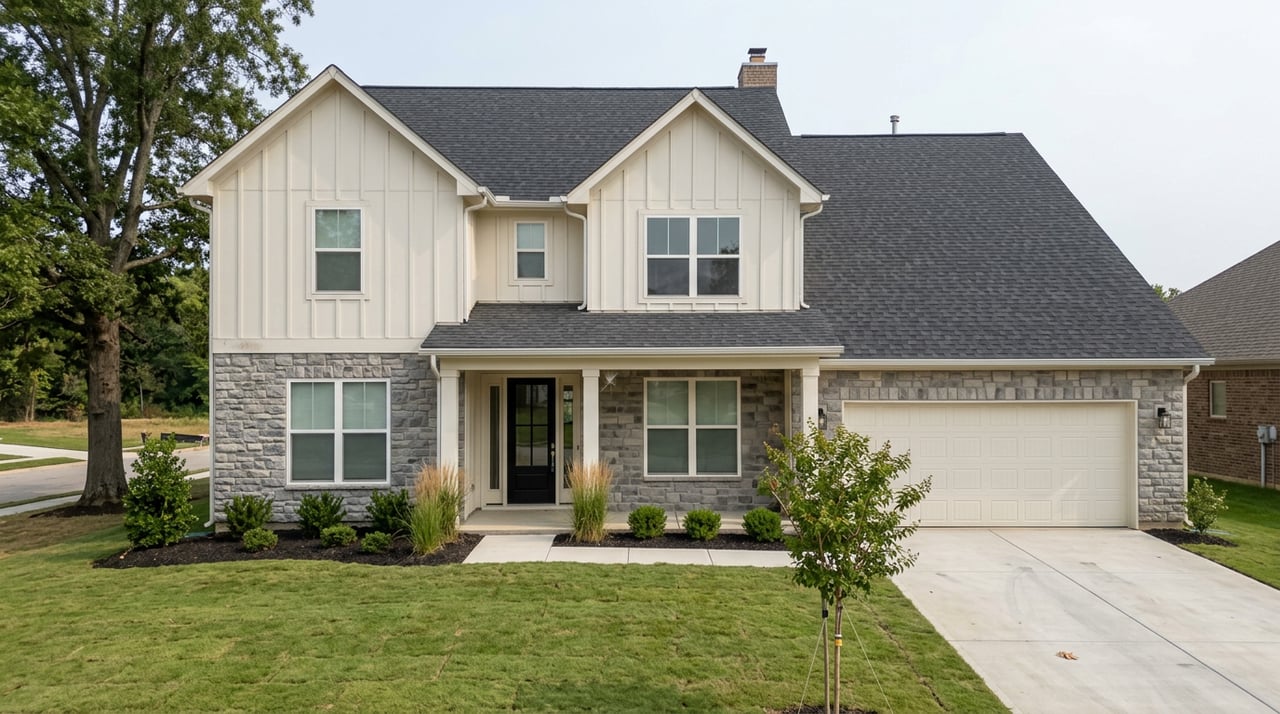
A buyer touring The Maples on a Saturday afternoon might see a resale listing on Gilreath Place priced at $649,900 and, three streets over, a Harney Homes to-be-built lot on the same list price. Same neighborhood, same amenities, same walk to the pool and pickleball courts. On paper, it looks like a coin flip between finishes and floor plans.
It is not. One of those two homes comes with a builder standing behind it, offering to lower that price, buy down the mortgage rate, or cover closing costs entirely, and the other does not. Understanding why changes what "same price" actually means in this subdivision right now.
The Twenty Thousand Dollars That Isn't on the Sign
Harney Homes, the primary builder still delivering new construction inside The Maples' 682 planned single-family lots, has been running a promotion called "Celebrate 250 Years of the American Dream" on several of its to-be-built plans, including the Abercrombie, Harcourt, Cumberland Ridge, and Fishers Walk floor plans. The offer: up to $20,000 in Flex Cash, usable to lower the price, buy down the interest rate, or cover closing costs, when the buyer uses the builder's preferred lender and title company. Separately, one listing for the Lillian floorplan showed a builder credit of 2 percent of the loan amount, $13,540, toward closing costs or upgrades, stacked with another 1 percent, $6,770, for using the preferred lender, First Bank Mortgage. On another plan, Harney advertised rates as low as 4.99 percent on a 30-year fixed loan with payments as low as $3,461 a month, or an alternative where the builder covers all closing costs for just $100 in earnest money.
None of that appears on the sign in the yard. The sign says a price. The Flex Cash, the rate, and the closing credit are negotiated separately, and they are why the sign is not the whole story.
A price cut on a to-be-built home shows up in county records as a lower comparable sale for every other lot the builder still owns. A rate buydown or a closing credit does not. The list price stays intact, and the discount hides inside the financing.
Why Builders Would Rather Buy Down Your Rate Than Cut the Price
Harney Homes has built more than 800 homes across 13 Middle Tennessee communities since 2003, priced from the $200,000s to the $800,000s. A builder operating at that scale is not making a one-off concession. It is managing a pipeline of unsold lots, and every recorded sale price becomes the appraisal comp for the next buyer's loan and the next appraisal on remaining inventory. A builder that cuts $20,000 off the sticker price on one lot has just made every other lot in that section worth $20,000 less on paper. A builder that hands the same buyer $20,000 through a rate buydown or closing credit keeps the recorded sale price untouched, and the remaining inventory keeps its value.
That is the mechanism. It is not a secret, and it is not unique to The Maples. It is simply the reason a builder's incentive almost never arrives as a price reduction, even when the dollar value is identical to one.
What Resale Sellers Are Up Against, and What They Are Not
Not every new home going up in The Maples comes from a production builder with an incentive budget. Local custom builders including Steve Martin Construction and Sam Anderson Construction have built homes on Maples lots too, typically one at a time, on contract, without a Flex Cash program or a preferred-lender arrangement behind them. A resale seller competing against a custom-built home is competing on price, condition, and immediate availability, the same terms that have always applied.
A resale seller competing against a Harney Homes lot with $20,000 in Flex Cash attached is competing against something structurally different: a builder that can lower the effective cost to the buyer without ever touching the number that shows up in the MLS. The resale seller has no equivalent lever. Cutting $20,000 off an asking price on a resale home is a straightforward price cut, visible to every buyer, every appraiser, and every future comp pull. There is no version of that discount that hides inside a financing structure, because the seller is not also the lender.
What resale still offers that a to-be-built lot cannot: a finished yard instead of a construction schedule, a move-in date measured in weeks instead of months, and no exposure to the delays or change orders that come with building from the ground up.
The Two Paths, Side by Side
| Harney Homes to-be-built (with Flex Cash) | Resale listing | |
|---|---|---|
| List price | Sticker price stays fixed | Negotiable, visible discount if reduced |
| Effective cost to buyer | Reduced through rate buydown or closing credit, up to $20,000 seen on recent listings | Reduced only through direct price cut |
| Financing | Often tied to preferred lender for the incentive to apply | Open to any lender, no incentive tie |
| Timeline | Months to completion on a to-be-built lot | Move-in ready, typically weeks to close |
| Landscaping and yard | New sod, minimal maturity | Established trees and beds in older sections |
| Appraisal risk | Builder protects comps by avoiding price cuts | Comp exposure is whatever the market shows |
The Price Band Where the Competition Bites
According to weekly market data from a Rutherford County brokerage covering the week ending June 6, 2026, builder incentives, specifically rate buydowns and closing cost credits, are creating direct competition for resale homes concentrated in the $350,000 to $550,000 range across the county. The Maples' resale listings, as of a snapshot in January 2026, ranged from $499,900 to $839,900, with an average list price around $701,195. That means the lower half of the neighborhood's resale inventory sits squarely inside the price band where builder incentives are doing the most work, while listings toward the top of the range face less of that specific pressure.
A seller listing a Maples resale home near $500,000 is not just competing against other resale sellers. They are competing against a lot three streets away where the builder can hand the buyer thousands of dollars in financing help without ever lowering the number on the sign.
Rates Explain the Timing
The reason this matters more in 2026 than it might have two years ago comes down to where mortgage rates actually sit. Freddie Mac's 30-year fixed rate for the week ending June 6, 2026 was 6.48 percent, down from 6.85 percent at the same point in 2025, but still well above the rates many current homeowners locked in years ago. Against that backdrop, a builder offer of 4.99 percent is not a marketing gimmick. It is a real gap of roughly a percentage and a half, which is exactly the kind of spread that changes a monthly payment enough to make a buyer choose new construction over resale even when the resale home offers more square footage or a better lot.
Five Questions Before You Compare Two Price Tags
- Is the rate buydown temporary or permanent? A temporary buydown lowers the payment for one to three years before reverting to the full note rate. A permanent buydown lowers it for the life of the loan. They are not worth the same thing even when the headline number looks identical.
- What is the note rate after the buydown period ends? That number, not the introductory rate, is what determines the real cost of the loan if a temporary buydown is involved.
- Is the incentive contingent on using the builder's preferred lender? If so, get a competing quote from an independent lender before assuming the incentive is a net gain once fees and rate spread are compared.
- What does the completion timeline cost you? A to-be-built home carries months of uncertainty, and if the buyer is also carrying a current home or a rental during that stretch, that cost belongs in the comparison too.
- What is the resale home offering in place of the incentive? Established landscaping, an immediate move-in date, and the absence of construction risk are real value, even if they do not show up as a dollar figure on a settlement statement.
None of this means new construction is the better deal or that resale is the safer one. It means the two price tags in The Maples right now are not measuring the same thing, and a buyer who compares them at face value is comparing the wrong numbers.
If you are trying to work out what a specific listing in The Maples is really offering once the incentive is unpacked, or you are a resale seller trying to price against a builder down the street, the Janelle Sells Team can walk through the real numbers with you. Let's find your dream home. Schedule a free consultation.
FAQ
Does every new home in The Maples come with a Flex Cash incentive? No. Production builders like Harney Homes have run Flex Cash and rate-buydown promotions on select to-be-built plans, but custom builders working on individual lots, including Steve Martin Construction and Sam Anderson Construction, typically do not offer the same kind of financing incentive.
Is a rate buydown always better than a straight price reduction? It depends on how long you plan to stay in the home. A permanent buydown benefits a long-term owner more than a temporary 2-1 style buydown, which reverts to the full note rate after a year or two. A straight price reduction lowers your loan balance from day one regardless of how long you stay.
Can a resale seller in The Maples offer something similar to Flex Cash? A resale seller can offer a closing cost credit or agree to a price reduction, but they cannot structure a builder-style rate buydown through an in-house lending arm, because they are not also the lender. Their negotiating tools are price, condition, and timeline, not financing structure.