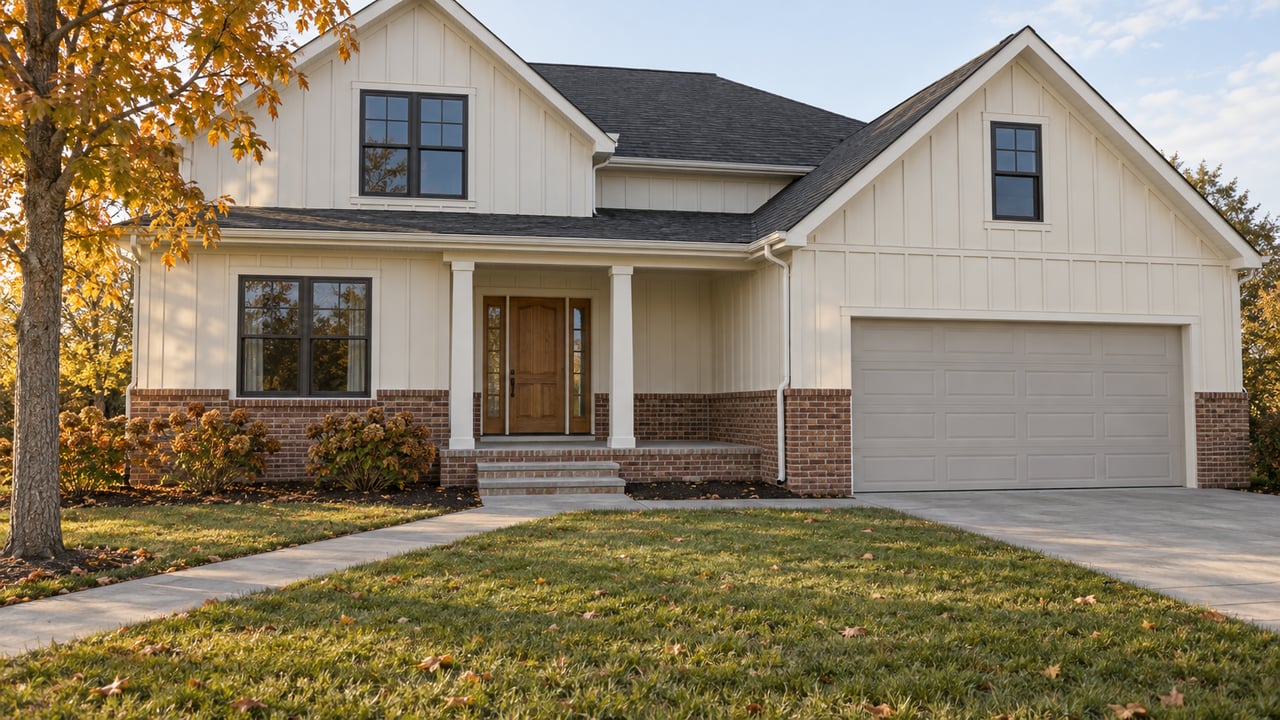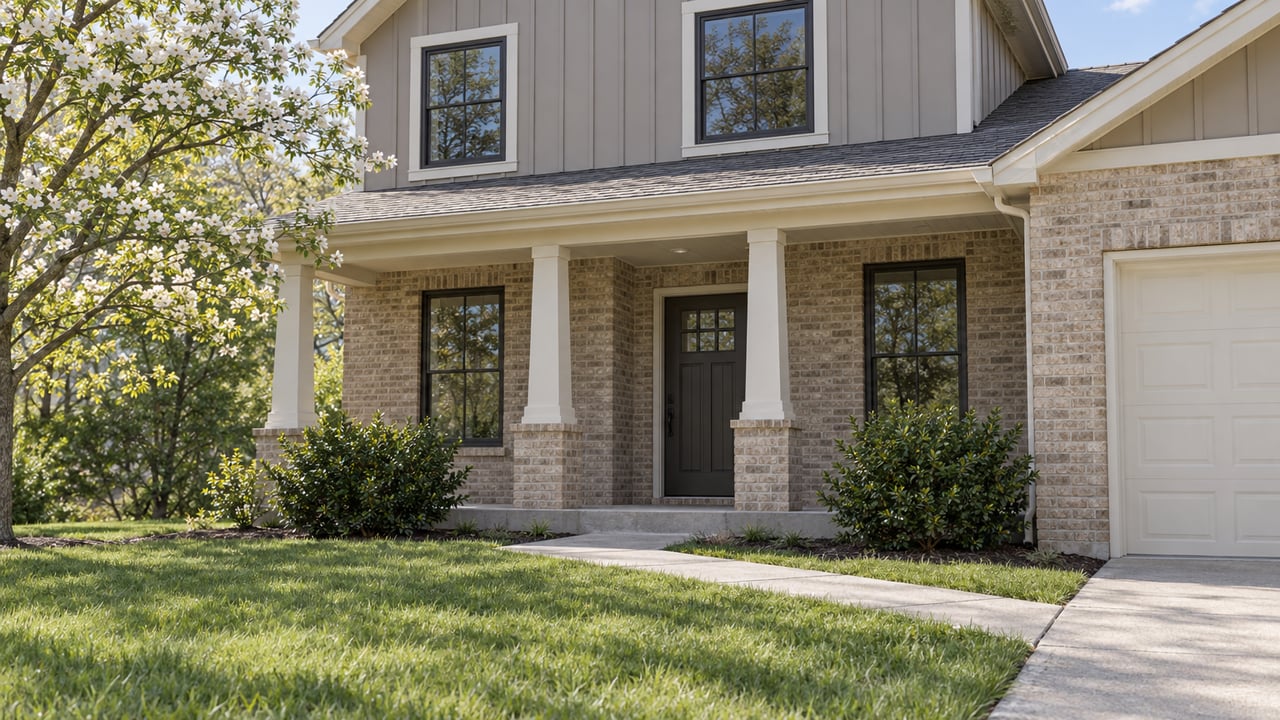
How old does a subdivision have to get before its name stops telling you anything useful?
Puckett Station's longest-running section sits along Maximillion Circle, Cortez Drive, Rubicon Drive and Drusilla Drive, and building there started around 2008 and continued into 2019. That is eleven years of construction under one subdivision sign, one HOA, and one set of amenities. A house that closed near the start of that run and a house that closed near the end of it look like neighbors on paper. They are not the same age underneath the drywall, and that gap is starting to show up at the inspection table rather than in the listing description.
Eleven Years, One Name
Most buyers treat a subdivision name as a proxy for a build era. In Puckett Station's case, that shortcut breaks down inside a single stretch of streets. A home that closed in 2009 and a home that closed in 2018 both carry the Puckett Station name, both sit on the same HOA rolls, and both were likely built by the same handful of production builders working through that decade. What they do not share is a mechanical clock. The furnace, the compressor, and the water heater in a 2009 build have been running for close to two decades. The same components in a 2018 build have barely cleared their first tune-up cycle.
That distinction rarely shows up when a listing gets pulled up online. Square footage, bedroom count, and lot size travel with the address. Original install date usually does not, unless someone goes looking for it.
What 12 to 17 Years Actually Means Here
Middle Tennessee's climate is part of why that gap matters more than it might elsewhere. C&M Heating and Cooling, which services homes across the region, puts the typical air conditioning lifespan in this area at 12 to 17 years, driven by how hard a system runs through a Tennessee summer. Trane's own guidance for residential equipment lands close to that range: an air conditioner or heat pump typically runs 10 to 12 years before replacement becomes the more sensible choice, while a furnace can often stretch to 15 to 20. Parker's Heating and Cooling, which works throughout the Murfreesboro area, points to 15 years as the mark where most systems start showing their age regardless of type.
Line those ranges up against Puckett Station's original section and the picture gets specific fast.
| Build Year | Age in 2026 | Where That Falls |
|---|---|---|
| 2009 | 17 years | Beyond some cited AC ranges, at the upper end of others; within the cited furnace range |
| 2013 | 13 years | Inside the regional 12-to-17-year range, approaching replacement territory |
| 2018 | 8 years | Below the cited replacement-age ranges |
A house from the early end of that eleven-year run is at or beyond some of the cited HVAC lifespan ranges, though not all of them. A house from the late end of the same run is younger relative to those ranges.
The Disclosure Form Asks for a Number, Not a Guess
Tennessee's Residential Property Disclosure Act requires anyone selling a one-to-four-unit residential property to give the buyer a written statement of known material defects before a purchase contract is signed. The standard form asks sellers to note the approximate age of the roof and to identify the type of heating, cooling, and water systems on the property, and to disclose any known defects in those systems. The law does not require a seller to hire an inspector or investigate the property before answering. It requires the seller to answer honestly based on what they actually know.
That distinction matters for a seller in Puckett Station's oldest built stretch who has lived in the house long enough to lose track of exactly when the outdoor unit went in. Guessing at an install date and getting it wrong creates a bigger problem than writing "unknown" and letting the buyer's inspection settle the question. A seller who wants a precise answer has a few places to check before listing: the manufacturer's data plate on the outdoor unit, any warranty registration paperwork from the original install, past service invoices from a local HVAC company, or the certificate of occupancy filed when the house was built. Any of those turns a guess into a fact, and a fact is what the disclosure form is asking for.
What Happens When the Inspector Finds the Original Unit
Once a buyer's inspection turns up a system at or past its typical service life, the conversation at the negotiating table tends to follow a predictable path. Trane's guidance includes a rule of thumb some contractors and agents use to sort a real problem from a manageable one: multiply the system's age by the estimated repair cost, and if that number tops $5,000, replacement usually makes more financial sense than another repair. A seventeen-year-old compressor needing a $400 repair clears that threshold immediately, which is exactly the kind of math a buyer's agent will walk through before asking for a credit instead of a repair.
None of this means a house in the early end of Puckett Station's build-out is a hard sell. It means the seller who already knows the answer, because the system was replaced at some point or because a service contract has kept it running well past its typical age, has a genuine selling point worth stating outright rather than leaving to the inspection report to discover. A documented HVAC replacement two years ago is worth more in a listing than silence on the subject, and it heads off a negotiation before it starts.
Checking Before You List, Not After the Report Comes Back
For a seller whose home sits in the earlier construction years of this section, the order of operations is worth reversing. Instead of waiting for a buyer's inspector to flag an aging system, a pre-listing service call from a licensed HVAC contractor documents the system's current condition, catches anything that needs attention, and gives the seller a paper trail to hand over rather than a defensive conversation to have later. That documentation, combined with whatever service records already exist, turns "we don't really know how old it is" into a specific answer with backup, which is the version of this conversation every seller would rather have.
The Later End of the Same Run Isn't Off the Hook Forever
None of this is urgent for a house that closed toward the tail of Puckett Station's original build-out, somewhere around 2017 or 2018. Those systems are still comfortably below the cited replacement-age ranges. The point is not that the whole section needs new equipment at once. It is that a single subdivision name covering eleven years of construction hides more mechanical age variation than most buyers assume, and the only way to know where a specific house falls on that clock is to check the actual build year, not the street it sits on.
FAQ
Does Tennessee require me to know my HVAC system's exact age before I list? No. The disclosure form asks what you know, and the law does not require an inspection or investigation before you answer. If you genuinely don't know the age, answer honestly based on what you actually know. Finding the answer ahead of time, through a service record or the manufacturer's data plate, just gives buyers more confidence.
Can I sell as-is and skip the disclosure conversation entirely? Under Tennessee Code § 66-5-202, a seller may provide a disclaimer statement instead of the full disclosure form, but only when the buyer agrees in writing to waive the standard disclosure. Most buyers financing a purchase still schedule their own inspection regardless of which form the seller provides, so an aging system tends to surface either way.
Does a newer HVAC system change what my house is worth? A documented recent replacement is worth mentioning in the listing itself, since it answers a question a buyer's inspector would otherwise raise on their own timeline instead of yours.
If you're weighing a sale somewhere along Maximillion Circle, Cortez Drive, Rubicon Drive or Drusilla Drive and want a clear read on where your home's systems actually stand before a buyer's inspector tells you, the Janelle Sells Team can walk through what to check and what to document before you list.
This article is general information, not legal, tax or financial advice. Consult a qualified professional about your situation.